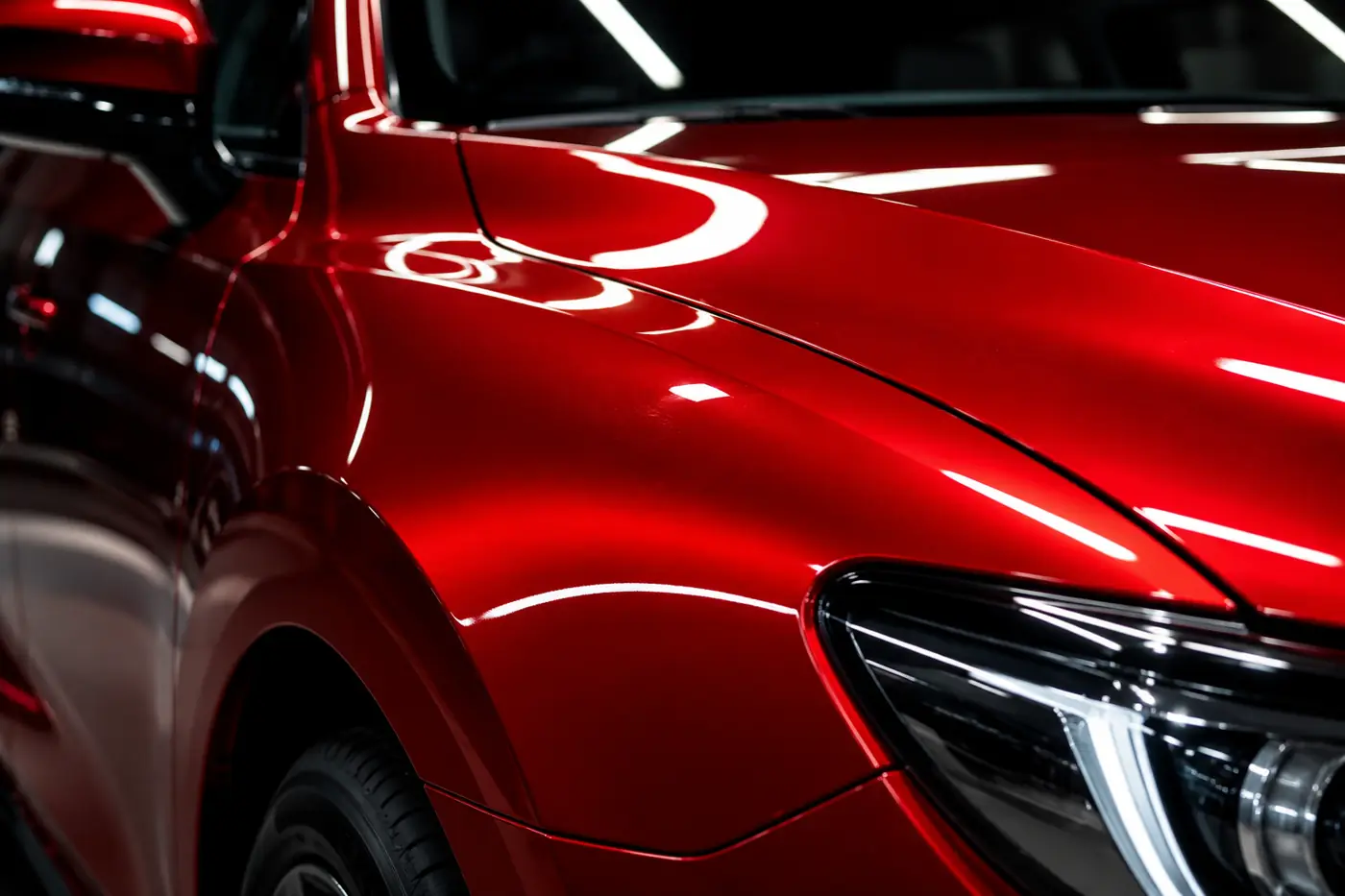
Top-tier weatherfastness
Bodywork endures years of UV and weather; only high-performance pigments with proven outdoor durability meet automotive colour-retention expectations.
 Pigments by Source From India
Applications
Pigment recommendations for automotive paint with technical checks and export enquiry support.
Automotive finishes set the highest bar for organic pigments because bodywork must hold colour through years of sun, weather and car-wash chemicals while matching across metal and plastic components. High-performance organic pigments deliver the clean, saturated reds, maroons, yellows and effect shades that metallic and pearl coats demand, but only weatherfast, thermally stable grades qualify. Export buyers serving OEM or refinish channels should confirm exceptional lightfastness, overbake stability, humidity and acid-rain resistance, and controlled flake orientation compatibility for basecoat-clearcoat systems.
At a glance
Bodywork endures years of UV and weather; only high-performance pigments with proven outdoor durability meet automotive colour-retention expectations.
Basecoats pass through curing ovens, so pigments must survive overbake without hue shift, weakening or blooming into the clearcoat.
Metallic and pearl finishes need transparent, cleanly dispersed pigments that let flakes orient correctly without seeding or streaking.
Body-shop repairs must match original panels, so lot-to-lot shade and strength reproducibility is essential for reliable colour matching.
Recommended pigments
A starting shortlist of export-grade organic pigments relevant to Pigments for Automotive Paint. Open any grade for shade, fastness and packing detail, or send your requirement for a matched recommendation.
Ready-to-use paste for fiberglass, FRP panels, and composites.
View export grade Blue PigmentsRed-shade alpha blue with dependable dispersion for inks and coatings.
View export grade Yellow PigmentsDiarylide yellow orange shade for plastics and heat-sensitive systems.
View export grade Red PigmentsDPP red for premium weather-resistant coatings and plastics.
View export grade Pigment PastesPU-compatible pigment paste for industrial coatings and elastomers.
View export gradeExplore more
Answers
Vehicle finishes face intense sun, weather and chemical exposure while requiring flawless, lasting colour. Standard organic pigments fade or shift under these conditions. High-performance classes such as quinacridones, perylenes and select DPP and benzimidazolone grades provide the durability, cleanliness and heat stability automotive systems demand.
In metallic and pearl coats, transparent organic pigments work alongside aluminium or mica flakes to create depth and travel. Pigments must disperse cleanly without disturbing flake orientation, and must be transparent enough to let the effect show. Seeding or flocculation ruins the finish.
Basecoats and primers pass through curing ovens, and repairs may be force-dried. Pigments must withstand these bake cycles, plus possible overbake, without darkening or blooming into the clearcoat. Verify overbake stability data for the specific oven schedule before qualifying a grade.
Both demand top durability, but refinish adds strict colour-match and lower-temperature-cure requirements since repairs happen in body shops, not factory ovens. OEM emphasises high-bake stability and process consistency. Many high-performance pigments serve both, but confirm the grade suits your specific channel and cure conditions.
Buyer knowledge base
Colour, consistency and compliance in one view — the checks that keep production stable and shipments on schedule.
For outdoor use, phthalocyanine and DPP grades keep colour through sun and weather.
Bags, cartons, pallets and labels planned for clean warehouse handling and clearance.
TDS, SDS/MSDS and batch COA, plus REACH and RoHS declarations issued on request.
Heat, light, weather, solvent and migration resistance matched to the end use, not over-specified.