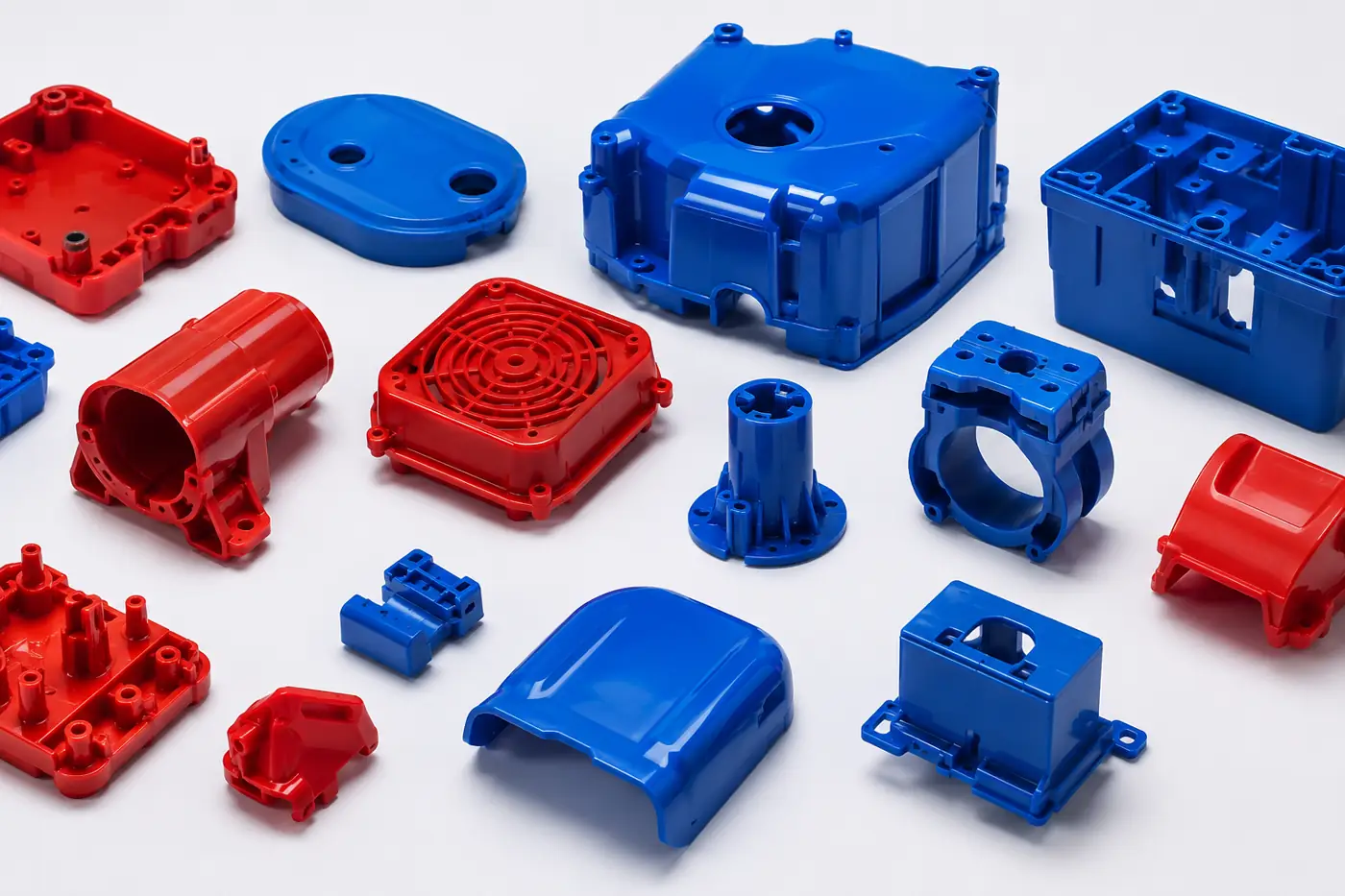
Processing heat stability
Match the pigment's rated heat resistance to your extrusion or moulding temperature; diarylides suit lower heat, phthalocyanines and DPP tolerate demanding engineering resins.
 Pigments by Source From India
Industries
Organic pigments for plastic industry sourced from India with grade selection, documents, and export support.
Colouring plastics puts pigments under processing heat, shear and long residence times, so heat stability and dispersibility govern selection. Organic pigments give bright, transparent or clean opaque shades that inorganics cannot, but grade choice must match the polymer and process temperature. Phthalocyanines and high-performance reds suit demanding polyolefins and engineering resins, while diarylides serve lower-temperature applications economically. Buyers sourcing from India should confirm heat stability at their moulding temperature, absence of warpage in polyethylene, migration and bleed resistance, and food-contact compliance where relevant before finalising bulk orders.
At a glance
Match the pigment's rated heat resistance to your extrusion or moulding temperature; diarylides suit lower heat, phthalocyanines and DPP tolerate demanding engineering resins.
Some organic pigments act as nucleating agents in HDPE and PP, causing shrinkage or warpage; request non-warping grades for moulded polyolefin parts.
In flexible or plasticised polymers, confirm the pigment resists migration and blooming so colour does not bleed to the surface or into adjacent parts.
For packaging and toys, require documentation confirming the pigment meets food-contact and toy-safety regulations relevant to your destination market.
Recommended pigments
A starting shortlist of export-grade organic pigments relevant to Pigments for Plastic Industry. Open any grade for shade, fastness and packing detail, or send your requirement for a matched recommendation.
Strong naphthol red for coatings, plastics, and masterbatch.
View export grade Pigment PastesStable epoxy paste for floor coatings and resin systems.
View export grade Green PigmentsYellow-shade green for plastics, coatings, PVC, and export applications.
View export grade Red PigmentsCalcium lake red for printing inks, plastics, and packaging coloration.
View export grade Orange PigmentsBright orange pigment for paint, plastic, and coating systems.
View export gradeExplore more
Answers
Check the pigment's rated heat stability against your maximum process temperature and residence time. Engineering resins like nylon or polycarbonate need high-heat organics such as phthalocyanines or DPP, whereas polyolefins at lower temperatures can use diarylides. Always run a moulding trial to confirm no shade shift.
Certain organic pigments nucleate crystallisation in HDPE and polypropylene, causing uneven shrinkage that warps moulded parts. Pigment suppliers offer non-warping or low-warpage grades formulated to minimise this effect. Specify your polymer and part geometry so the exporter recommends a suitable, dimensionally stable grade.
Particle size drives it: finer pigment particles scatter less light and give transparent, high-chroma effects useful for tinting and film; coarser or opacified grades hide better. Choose based on whether your part needs see-through brilliance or full coverage, and confirm the grade delivers the required opacity.
Selected grades are, provided they carry documentation confirming compliance with food-contact regulations for your market and low extractable heavy metals. Not every organic pigment qualifies, so request specific regulatory statements and Colour Index identification, and verify the grade is approved for the exact contact conditions your product involves.
Buyer knowledge base
Buying organic pigments from India, simplified: the checks that matter, the documents to expect and the quickest route from enquiry to shipment.
Heat, light, weather, solvent and migration resistance matched to the end use, not over-specified.
Sourced at origin through an in-house export desk — one contact from sample to shipment.
High tinting strength means less pigment per batch and cleaner, more economical shades.
For outdoor use, phthalocyanine and DPP grades keep colour through sun and weather.