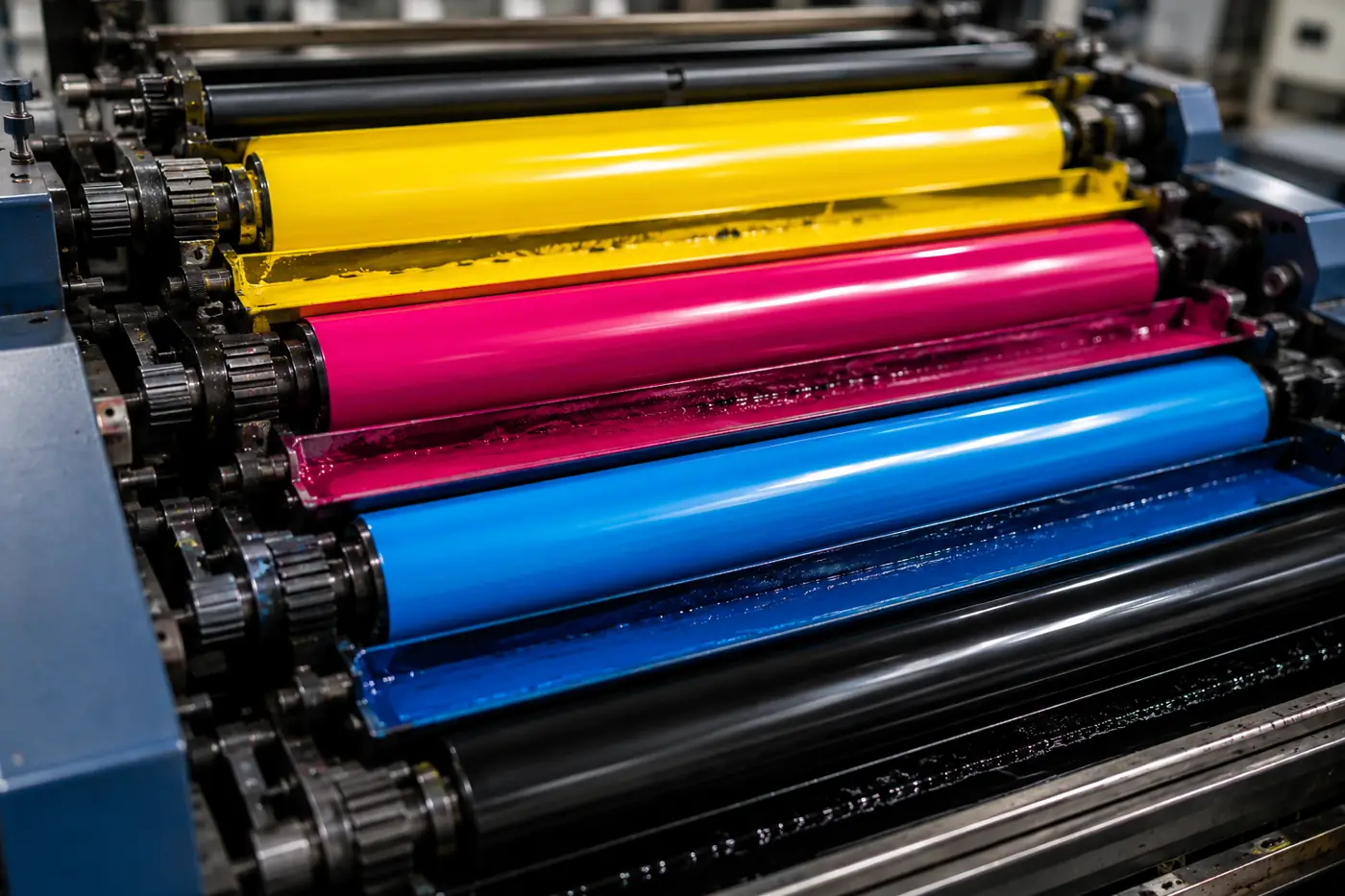
Match pigment to ink type
Offset, flexo, gravure and UV inks differ in vehicle and drying, so specify pigments suited to that system's solvents and cure.
 Pigments by Source From India
Applications
Pigment recommendations for printing ink with technical checks and export enquiry support.
Printing inks cover offset, flexo, gravure and UV systems, each with a different vehicle and drying mechanism, so organic pigment selection varies sharply with ink type. Common priorities are high tinting strength for thin ink films, transparency for process colour trapping, solvent and water fastness matched to the vehicle, and fine dispersion for gloss and print definition. Buyers should specify the ink family and end use, confirm bleed and light fastness for the application, and check rheology behaviour so pigment loading does not thicken the ink beyond press requirements.
At a glance
Offset, flexo, gravure and UV inks differ in vehicle and drying, so specify pigments suited to that system's solvents and cure.
Four-colour printing relies on transparent pigments that trap cleanly over one another so overprints build accurate secondary shades.
Inks lay down thin films, so pigments need high tinting strength to reach density without overloading and thickening the ink.
Confirm light, solvent and, where relevant, alkali or product resistance matched to whether the print is packaging, publication or outdoor.
Recommended pigments
A starting shortlist of export-grade organic pigments relevant to Pigments for Printing Ink. Open any grade for shade, fastness and packing detail, or send your requirement for a matched recommendation.
High-strength beta blue for export-grade paints, inks, plastics, and masterbatch.
View export grade Yellow PigmentsArylide yellow grade for decorative coatings and water-based systems.
View export grade Red PigmentsStrong naphthol red for coatings, plastics, and masterbatch.
View export grade Pigment PastesStable epoxy paste for floor coatings and resin systems.
View export grade Green PigmentsYellow-shade green for plastics, coatings, PVC, and export applications.
View export gradeExplore more
Answers
Offset uses viscous paste inks with oil-based vehicles and needs strong, water-balance-stable pigments, while flexo uses fluid solvent or water inks needing fast redispersion and solvent-appropriate fastness. Gravure is similar to flexo but finer. Each vehicle changes the wetting, rheology and fastness demanded of the pigment.
In four-colour process printing, cyan, magenta, yellow and black overprint to create the full gamut. Transparent pigments let underlying colours show through so overprints mix correctly. Opaque pigments would block lower layers and distort secondary and tertiary shades, so process inks specify transparent grades.
UV inks cure by photopolymerisation, so pigments must not absorb the curing wavelengths too strongly or they slow through-cure, especially in dense shades. Pigments also must be stable in the reactive monomer vehicle. Grades are selected for cure compatibility as well as colour and fastness.
Packaging inks may need product and rub resistance, publication inks prioritise strength and cost, and outdoor or label inks need light fastness. The same colour index pigment may come in versions tuned for each. Always state the print's end use so the correct fastness profile is supplied.
Buyer knowledge base
What a buyer weighs before ordering: grade fit, fastness, dispersion, documents and export packing — condensed into a quick reference for purchasing and R&D.
TDS, SDS/MSDS and batch COA, plus REACH and RoHS declarations issued on request.
Heat, light, weather, solvent and migration resistance matched to the end use, not over-specified.
Sourced at origin through an in-house export desk — one contact from sample to shipment.
High tinting strength means less pigment per batch and cleaner, more economical shades.