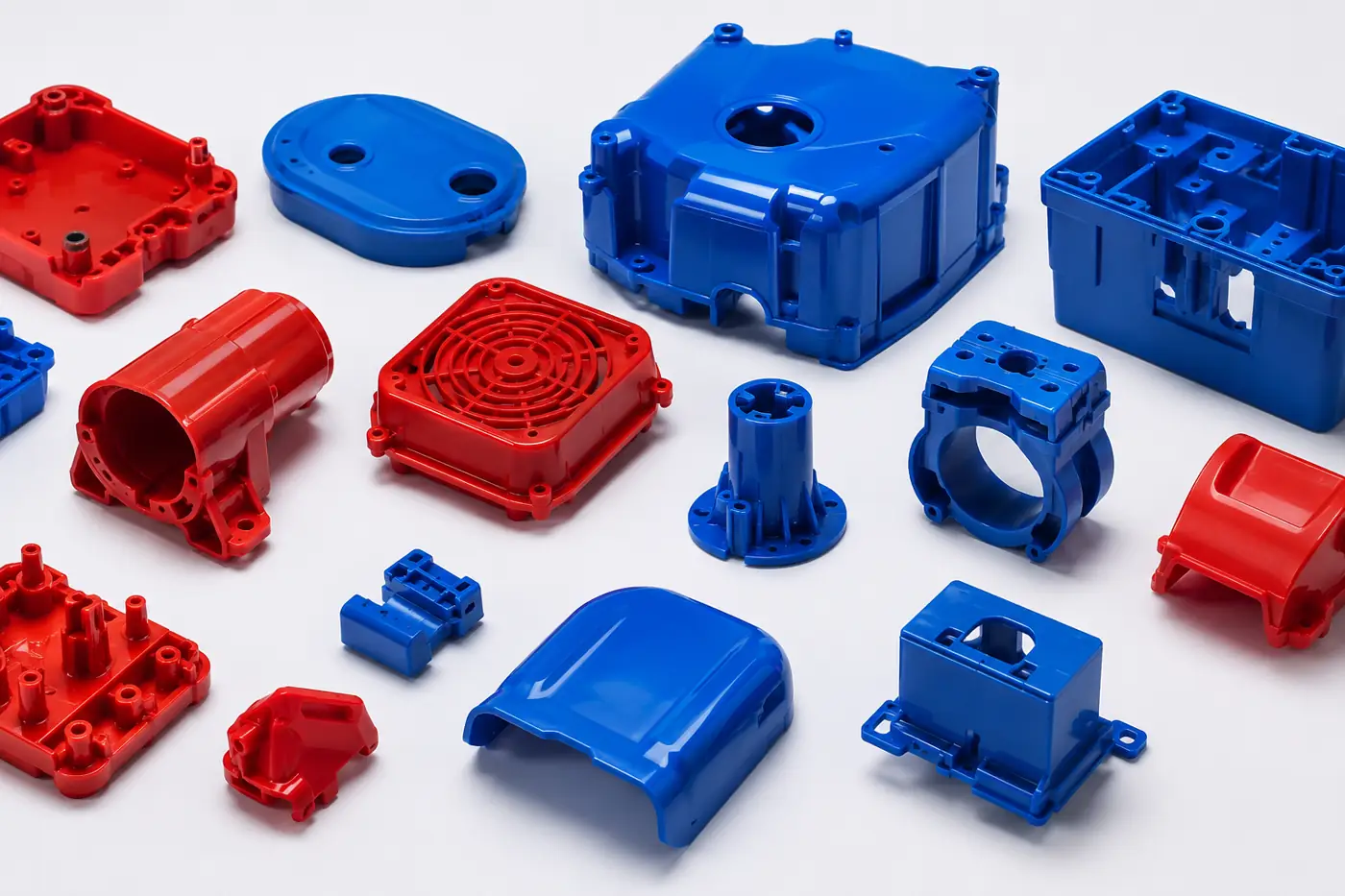
Styrenic heat limits
ABS processes at moderate to high heat, so pigments must be stable across that window without darkening or losing tinting strength.
 Pigments by Source From India
Applications
Pigment recommendations for abs with technical checks and export enquiry support.
ABS is a styrenic engineering plastic used for appliances, automotive interiors and consumer goods, processed at moderate to high temperatures with a rubber phase that raises migration and heat concerns. Organic pigments must be heat stable for the ABS melt, resist migration and blooming in the styrenic matrix, and, for exterior or automotive-interior parts, offer good light and weather fastness. Buyers should confirm heat stability matched to ABS processing, migration resistance to avoid surface bloom and plate-out, and light fastness suited to whether the part is interior trim or sunlight-exposed.
At a glance
ABS processes at moderate to high heat, so pigments must be stable across that window without darkening or losing tinting strength.
The styrenic, rubber-modified matrix promotes migration, so specify non-blooming grades to keep part surfaces clean and free of plate-out.
Automotive-interior and appliance ABS faces indirect sunlight, so choose lightfast pigments so trim and housings do not fade.
ABS consumer goods rely on bright colours, so pigments must deliver clean, strong shades with reproducible strength across production.
Recommended pigments
A starting shortlist of export-grade organic pigments relevant to Pigments for ABS. Open any grade for shade, fastness and packing detail, or send your requirement for a matched recommendation.
Solvent-compatible paste for industrial paints and ink systems.
View export grade Yellow PigmentsHigh-tinctorial yellow selected for general industrial demand.
View export grade Red PigmentsNaphthol red with balanced brightness and industrial usability.
View export grade Pigment PastesDispersion paste designed for polyester resin coloration.
View export grade Green PigmentsChlorinated phthalocyanine green for durable industrial coloration.
View export gradeExplore more
Answers
ABS is a styrenic with a rubber phase, processed at moderate to high temperatures, so pigments must be heat stable for the melt and resist migration in the styrenic matrix. These twin constraints, heat and migration, narrow the usable range, so grades are selected and validated specifically for ABS rather than generically.
The styrenic, rubber-modified structure of ABS can let mobile pigments migrate to the surface and bloom, or plate out on tooling, causing appearance defects and colour drift. Non-migrating grades keep the surface clean and colour stable, which matters for the glossy, high-quality finish expected on ABS goods.
Yes, interior trim faces sunlight through glass over years, so pigments need good light fastness to resist fading, along with the heat and migration stability ABS requires. Interior automotive specifications are often stricter than general consumer goods, so validate light fastness against the relevant interior exposure requirements.
Both are styrenics with heat and migration limits, but ABS has a rubber phase and often higher processing demands and performance expectations, such as automotive use. Polystyrene is simpler and sometimes needs clarity for crystal grades. The styrenic constraints are shared, but ABS usually demands more robust, validated grades.
Buyer knowledge base
From shade approval to repeat supply — the essentials of sourcing organic pigments from India, written for technical evaluators and purchase managers.
Heat, light, weather, solvent and migration resistance matched to the end use, not over-specified.
Sourced at origin through an in-house export desk — one contact from sample to shipment.
High tinting strength means less pigment per batch and cleaner, more economical shades.
For outdoor use, phthalocyanine and DPP grades keep colour through sun and weather.