Stoving heat stability
Powder coatings cure by baking, so pigments must withstand the stoving temperature without shade shift, weakening or blooming.
 Pigments by Source From India
Applications
Pigment recommendations for powder coatings with technical checks and export enquiry support.
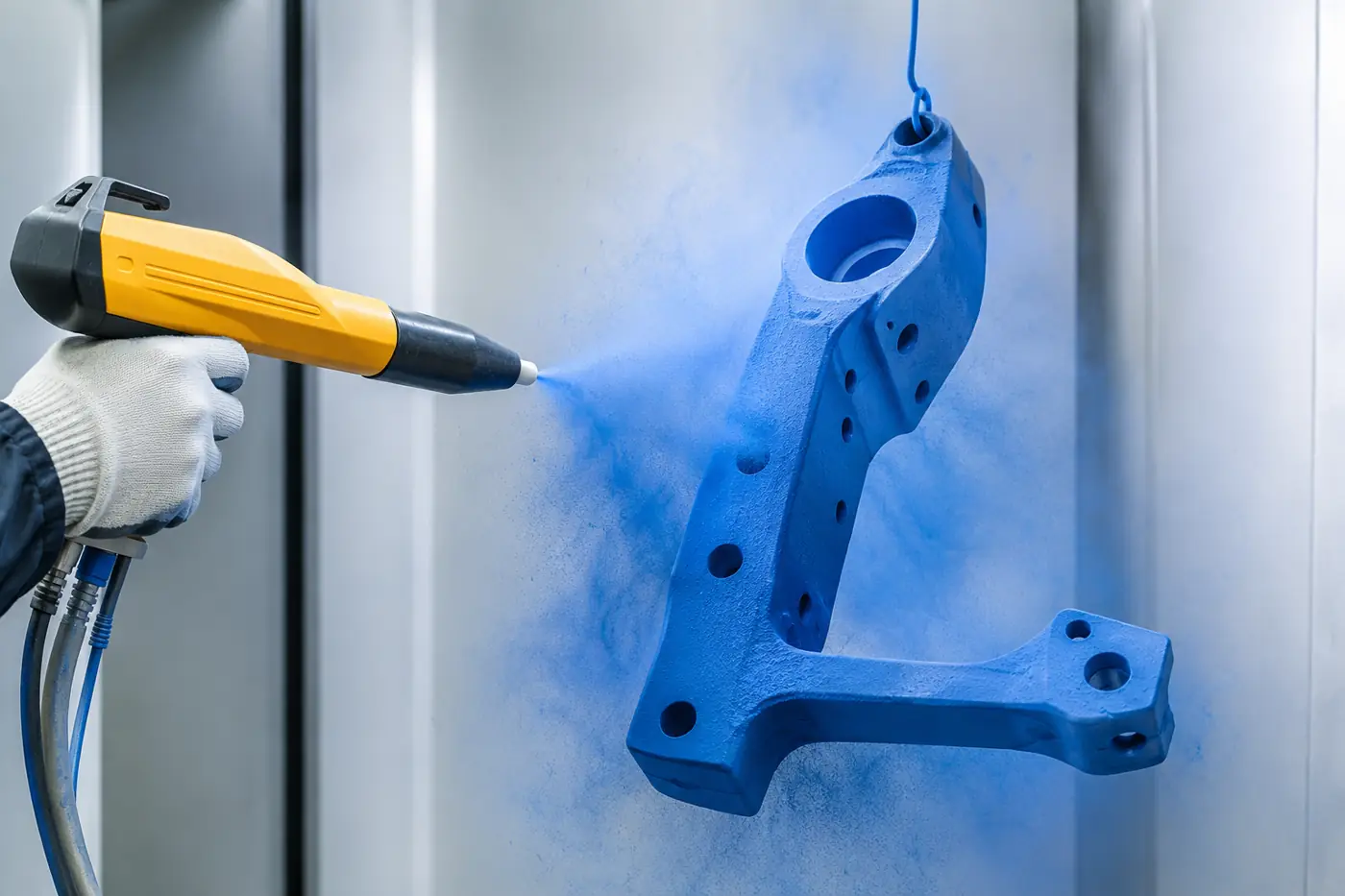
Powder coatings are solvent-free finishes applied electrostatically and cured by baking, so organic pigments must survive the stoving temperature without shade shift, disperse well through melt-mixing during extrusion of the powder, and not impair the powder's flow, charging or film formation. For exterior architectural powders, weather fastness is essential. Buyers should confirm heat stability matched to the cure schedule, compatibility with the resin chemistry (epoxy, polyester or hybrid), weather fastness for outdoor use, and dispersion behaviour that keeps colour uniform without affecting the electrostatic application of the powder.
At a glance
Powder coatings cure by baking, so pigments must withstand the stoving temperature without shade shift, weakening or blooming.
Powder is made by extrusion melt-mixing, so pigments must disperse well there to give uniform colour without specks in the film.
Match pigments to the epoxy, polyester or hybrid resin so colour and cure are unaffected across interior and exterior powder systems.
Architectural powder on facades and fittings faces UV, so specify weatherfast pigments so exterior colours resist fading and chalking.
Recommended pigments
A starting shortlist of export-grade organic pigments relevant to Pigments for Powder Coatings. Open any grade for shade, fastness and packing detail, or send your requirement for a matched recommendation.
Diarylide orange used for inks, textiles, and industrial colorants.
View export grade Pigment PastesWater-dispersible pigment paste for coatings and textile systems.
View export grade Yellow PigmentsBright green-shade yellow for offset ink and coating applications.
View export grade Red PigmentsQuinacridone magenta for high-performance paints and polymers.
View export grade Pigment PastesReady-to-use paste for fiberglass, FRP panels, and composites.
View export gradeExplore more
Answers
Powder coatings are cured by baking at elevated temperatures, so pigments must be heat stable enough to hold shade and strength through the stoving schedule without darkening or blooming. The specific cure temperature and time set the requirement, so validate the pigment against the actual bake schedule used.
The powder is produced by melt-mixing pigment and resin in an extruder, then cooling, grinding and classifying. Good dispersion during that melt-mix stage is essential for uniform colour and speck-free films. Since there is no solvent to aid wetting, pigments are chosen for effective dispersion in the melt-mix process.
Epoxy, polyester and hybrid powder systems differ in cure chemistry and typical use, interior versus exterior. Pigments must be compatible with the resin and its cure so colour and film properties are unaffected. Exterior polyester powders especially need weatherfast pigments, so selection is matched to both the resin and the exposure.
Yes. Architectural powder coatings on facades, windows, fencing and outdoor fittings face prolonged UV and weather, which fade weak pigments and can cause chalking. Weatherfast grades matched to the shade keep exterior powder-coated colours durable. Interior powders are less demanding, but outdoor applications require validated weather-durable pigments.
Buyer knowledge base
The essentials behind a pigment order: chemistry matched to end use, documents in order, and packing built for your destination.
For plasticised and polyolefin systems, grades are chosen to resist blooming and plate-out.
REACH and RoHS declarations and correct HS codes prepared for your market's customs.
Approve shade, strength and dispersion on a sample before any production quantity.
25 kg bags, palletised and batch-labelled, cleared under HSN 3204 17 90 for smooth customs.