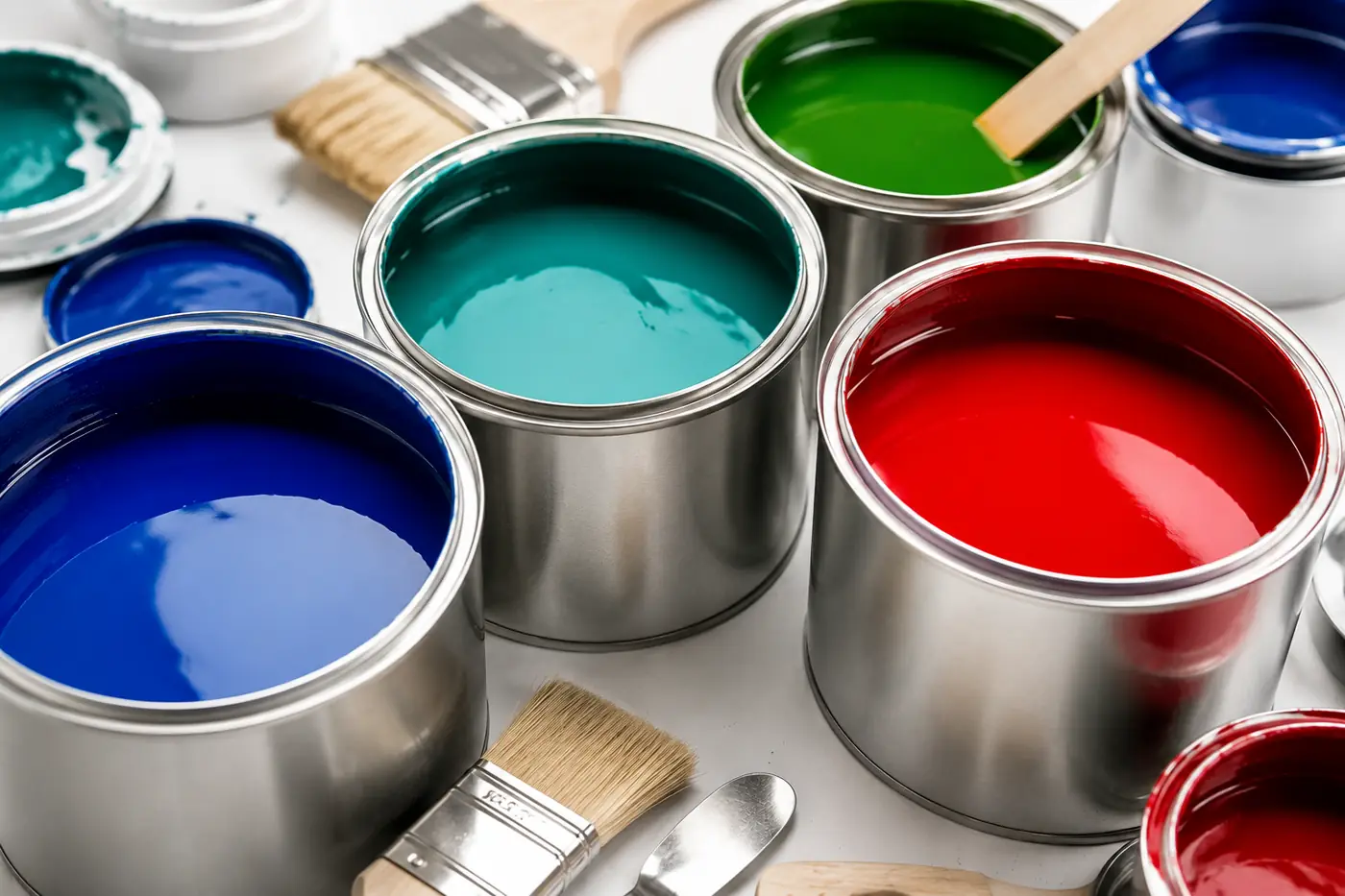
Weatherfast exterior shades
Phthalo blue/green, quinacridone and DPP grades hold colour under prolonged UV and rain, making them the backbone of exterior decorative and masonry paints.
 Pigments by Source From India
Industries
Organic pigments for paint industry sourced from India with grade selection, documents, and export support.
Decorative and industrial paints lean on organic pigments for clean, high-chroma shades that inorganics cannot match. Phthalocyanine blues and greens anchor most palettes for their exceptional light and weather fastness, while quinacridones and DPPs deliver durable reds and magentas for exterior finishes. Buyers sourcing from India should confirm consistent tinting strength batch to batch, compatibility with their resin and solvent systems, and rheology behaviour after dispersion. Ask for exact shade-matching data, heat and overcoat fastness, and complete regulatory documentation before committing to bulk export volumes.
At a glance
Phthalo blue/green, quinacridone and DPP grades hold colour under prolonged UV and rain, making them the backbone of exterior decorative and masonry paints.
Verify batch-to-batch tinting strength so automated tint machines reproduce shades reliably; small strength drift forces costly recalibration across a paint line.
Confirm each pigment disperses cleanly in your alkyd, acrylic or emulsion base without flocculation, seeding or shade shift during let-down.
Some diarylide and naphthol reds can bleed into subsequent coats; request bleed-resistance data before using them in multi-coat or contrasting systems.
Recommended pigments
A starting shortlist of export-grade organic pigments relevant to Pigments for Paint Industry. Open any grade for shade, fastness and packing detail, or send your requirement for a matched recommendation.
Chlorinated phthalocyanine green for durable industrial coloration.
View export grade Yellow PigmentsHigh-performance yellow for demanding coating and plastic requirements.
View export grade Orange PigmentsDiarylide orange used for inks, textiles, and industrial colorants.
View export grade Pigment PastesWater-dispersible pigment paste for coatings and textile systems.
View export grade Yellow PigmentsBright green-shade yellow for offset ink and coating applications.
View export gradeExplore more
Answers
Phthalocyanine blue and green, quinacridone reds and violets, and DPP reds are preferred for exterior work because they resist UV fading and weathering. Diarylides and naphthols suit interior or lower-durability shades where cost matters more than long-term lightfastness.
Check fineness of grind, gloss, and colour development after milling, plus stability with no flocculation on standing. A well-dispersed organic pigment gives full tinting strength, clean undertone and no seeding; poor dispersion shows as haze, low chroma or shade drift.
Yes, though requirements are lower. Interior walls still receive indirect daylight, so moderate lightfastness prevents visible fading near windows. Request rated data for every shade and reserve the highest-fastness organics for deep, bright colours that fade fastest.
Ask for a technical data sheet, safety data sheet, Colour Index identification, heavy-metal and REACH or regional compliance statements, and a batch certificate of analysis. Reputable Indian exporters also provide shade-standard retains so you can verify consistency against approved references.
Buyer knowledge base
A concise sourcing reference — how grade, shade and fastness are matched to your process, and what to send to get a qualified quotation quickly.
Target a physical standard or current reference; the lab confirms undertone and tinting strength.
For plasticised and polyolefin systems, grades are chosen to resist blooming and plate-out.
REACH and RoHS declarations and correct HS codes prepared for your market's customs.
Approve shade, strength and dispersion on a sample before any production quantity.