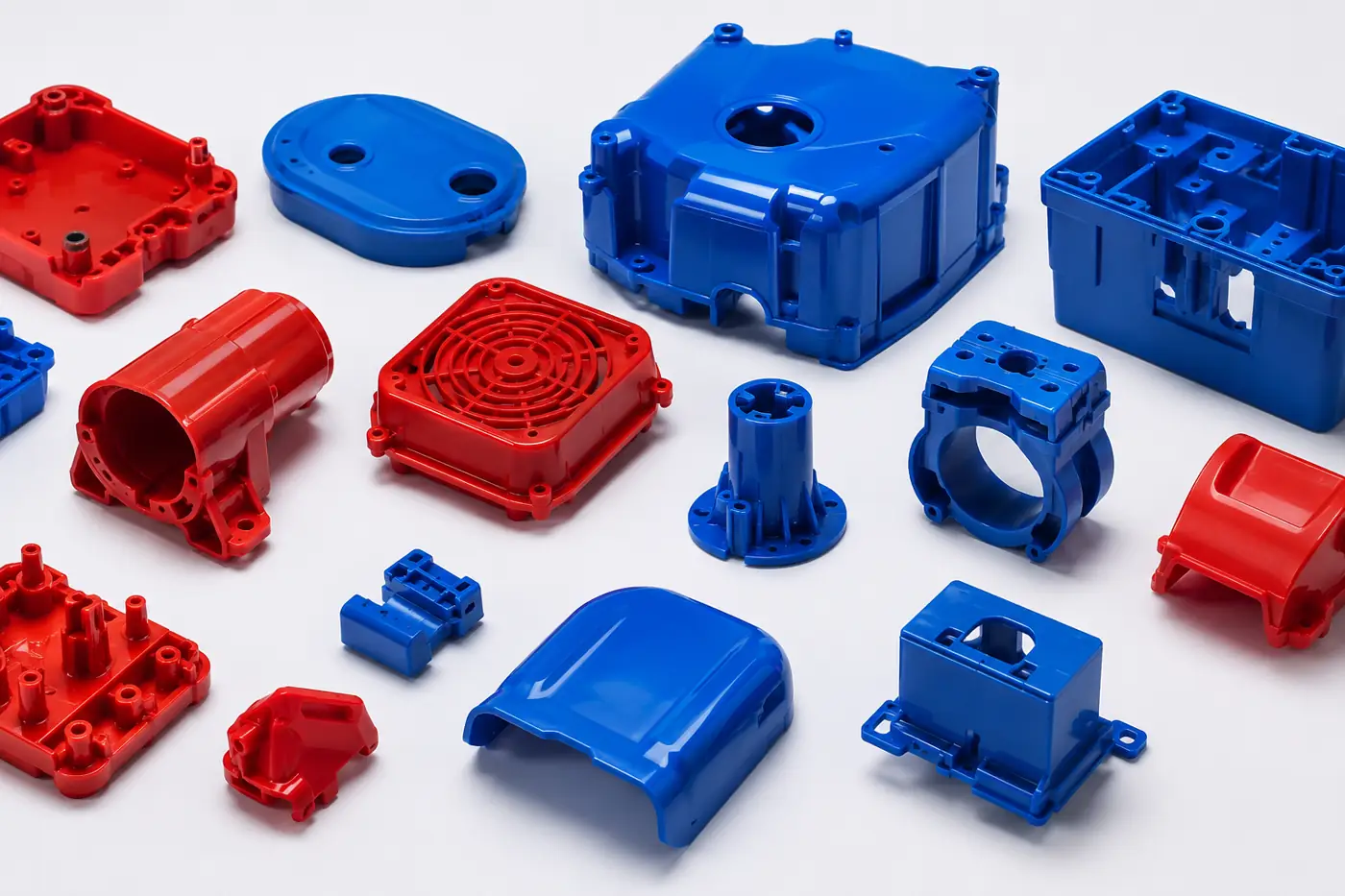
High-heat grades required
PP processes hot, so pigments need strong heat stability to survive injection and fibre extrusion without darkening or losing strength.
 Pigments by Source From India
Applications
Pigment recommendations for pp with technical checks and export enquiry support.
Polypropylene combines a high processing temperature with strong crystallinity, making it one of the more demanding polyolefins for organic pigment selection. Pigments must be heat stable for hot injection and fibre processes and, crucially, must not nucleate crystallisation and warp thin, flat or long-flow parts. Colour cleanliness in packaging, housewares and fibres also matters. Buyers should specify high-heat, non-warping grades validated in PP, confirm dispersion at fibre-fine let-downs where relevant, and check light and weather fastness for any outdoor or automotive-interior applications.
At a glance
PP processes hot, so pigments need strong heat stability to survive injection and fibre extrusion without darkening or losing strength.
PP is very sensitive to pigment nucleation; specify non-warping grades for flat lids, thin-wall parts and long-flow mouldings.
PP fibre and tape need pigments dispersed extremely fine so they pass spinnerets without filter blocking or filament breaks.
Automotive-interior and outdoor PP require weatherfast pigments that resist fading under sunlight through the window or open exposure.
Recommended pigments
A starting shortlist of export-grade organic pigments relevant to Pigments for PP. Open any grade for shade, fastness and packing detail, or send your requirement for a matched recommendation.
Dispersion paste designed for polyester resin coloration.
View export grade Green PigmentsChlorinated phthalocyanine green for durable industrial coloration.
View export grade Yellow PigmentsHigh-performance yellow for demanding coating and plastic requirements.
View export grade Orange PigmentsDiarylide orange used for inks, textiles, and industrial colorants.
View export grade Pigment PastesWater-dispersible pigment paste for coatings and textile systems.
View export gradeExplore more
Answers
PP combines high processing temperature with strong crystallinity, so a pigment must be both heat stable and non-nucleating. Many pigments fail one requirement or the other. This narrows the usable set, making validated high-heat, non-warping PP grades essential rather than optional for quality moulded and fibre products.
Certain organic pigments act as nucleating agents, increasing crystallinity and changing shrinkage unevenly across a part. In flat lids, thin walls or long-flow mouldings this shows as warp or distortion. Non-warping grades are formulated and selected to avoid altering PP's crystallisation behaviour.
PP fibre and slit tape are spun through fine spinnerets, so pigment must be dispersed extremely finely to avoid blocking filters and breaking filaments. High heat stability and non-nucleation still apply. Fibre colouring therefore uses carefully conditioned, finely milled pigment grades, usually via masterbatch.
Not reliably. PP runs hotter and is more warpage sensitive than LDPE, so a pigment adequate for cool LDPE film may darken or distort PP parts. Always confirm the grade is heat rated and warp tested specifically for polypropylene before transferring it across polyolefins.
Buyer knowledge base
A concise sourcing reference — how grade, shade and fastness are matched to your process, and what to send to get a qualified quotation quickly.
Heat, light, weather, solvent and migration resistance matched to the end use, not over-specified.
Sourced at origin through an in-house export desk — one contact from sample to shipment.
High tinting strength means less pigment per batch and cleaner, more economical shades.
For outdoor use, phthalocyanine and DPP grades keep colour through sun and weather.