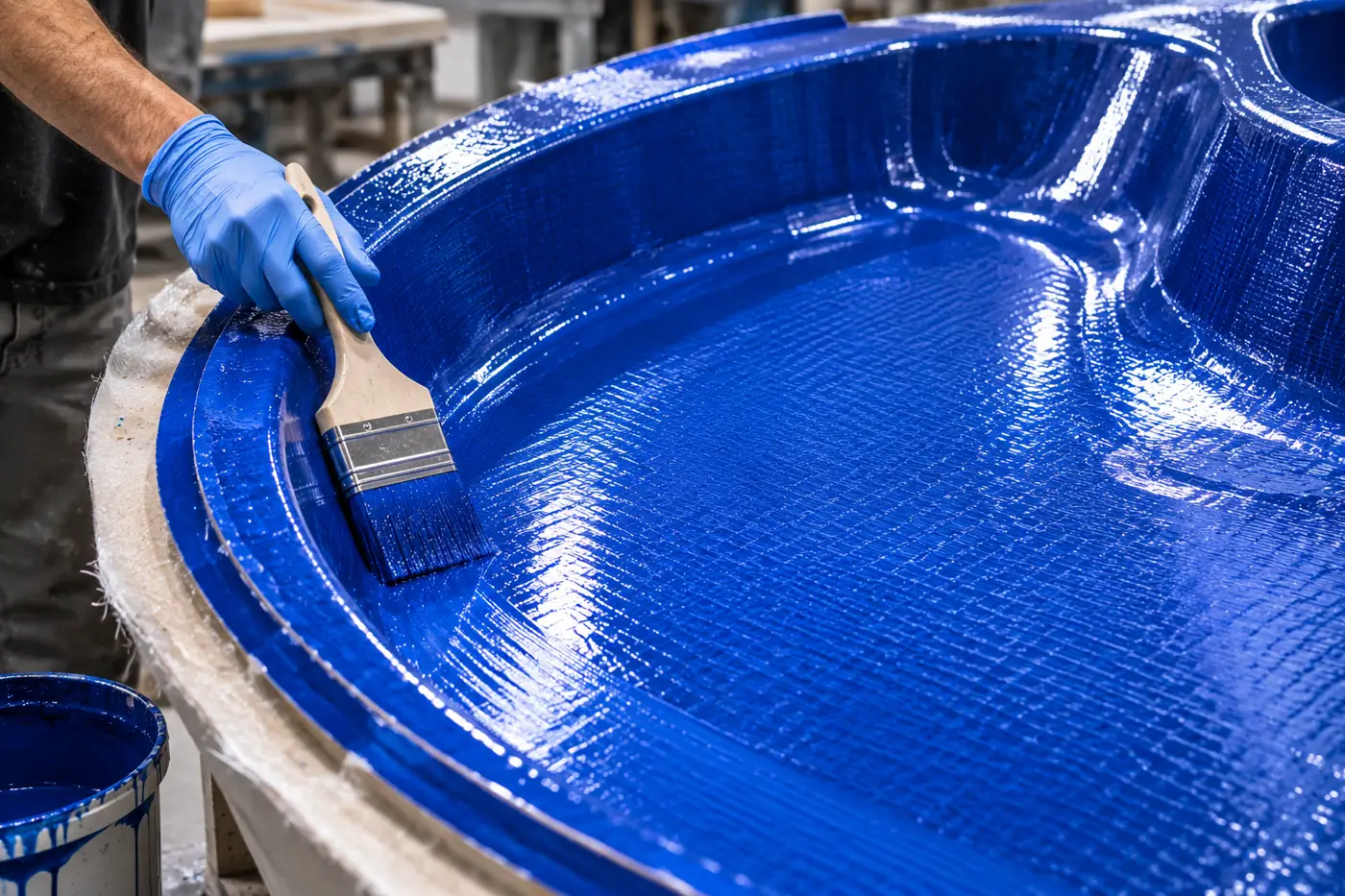
Amine hardener compatibility
Pigments must not react with amine or polyamide curing agents, avoiding shade shift, cure inhibition or seeding in the reactive epoxy system.
 Pigments by Source From India
Applications
Pigment recommendations for epoxy flooring with technical checks and export enquiry support.
Epoxy flooring cures through reactive amine chemistry with exotherm, so pigments must be alkali-stable, non-reactive with hardeners, and free of moisture or amine sensitivity that causes shade drift or slow cure. Source From India supplies epoxy-grade organics, often as pre-dispersed pastes in compatible carriers, for self-leveling and coating floors. Buyers should confirm compatibility with amine and polyamide hardeners, resistance to yellowing under UV where daylight reaches the floor, chemical and abrasion durability, and clean dispersion without seeding in high-solids systems. Ready pastes ensure uniform color across large poured areas with minimal on-site mixing error.
At a glance
Pigments must not react with amine or polyamide curing agents, avoiding shade shift, cure inhibition or seeding in the reactive epoxy system.
Industrial floors face cleaners and spills, so pigments need alkali stability and chemical fastness to hold color under aggressive service conditions.
Standard epoxy yellows outdoors, so where daylight reaches floors we advise stable pigments and note the binder's own yellowing tendency.
Ready pigment pastes give uniform color across large self-leveling pours and reduce on-site mixing error and streaking in poured floors.
Recommended pigments
A starting shortlist of export-grade organic pigments relevant to Pigments for Epoxy Flooring. Open any grade for shade, fastness and packing detail, or send your requirement for a matched recommendation.
Arylide yellow grade for decorative coatings and water-based systems.
View export grade Red PigmentsStrong naphthol red for coatings, plastics, and masterbatch.
View export grade Pigment PastesStable epoxy paste for floor coatings and resin systems.
View export grade Green PigmentsYellow-shade green for plastics, coatings, PVC, and export applications.
View export grade Red PigmentsCalcium lake red for printing inks, plastics, and packaging coloration.
View export gradeExplore more
Answers
Epoxy floors cure with amine or polyamide hardeners that can react with sensitive pigments, causing color shift or interfering with cure. We select non-reactive, alkali-stable grades proven in reactive epoxy systems, so poured floors reach full cure and hold their intended shade uniformly across the slab.
The epoxy binder itself tends to yellow under UV, separate from the pigment. Where floors get daylight we recommend UV-stable pigments and often a suitable topcoat, and we advise buyers that binder yellowing, not just pigment fade, affects perceived long-term color.
Yes. Pre-dispersed pastes in epoxy-compatible carriers give consistent color and cut on-site mixing errors across large self-leveling pours. This reduces streaking and shade variation between batches, which matters most for expansive continuous floors where color uniformity is highly visible.
Industrial floors meet cleaning agents, oils and abrasion, so pigments need chemical and alkali fastness while the resin provides wear resistance. We recommend robust organic grades that keep color under spills and traffic, matched to the service environment the floor will face.
Buyer knowledge base
The essentials behind a pigment order: chemistry matched to end use, documents in order, and packing built for your destination.
Approve shade, strength and dispersion on a sample before any production quantity.
25 kg bags, palletised and batch-labelled, cleared under HSN 3204 17 90 for smooth customs.
Guidance on oil absorption and let-down, plus ready-to-use pastes where direct handling helps.
Target a physical standard or current reference; the lab confirms undertone and tinting strength.