Cure-inert selection
Casting pigments must not react with epoxy hardeners, polyester catalysts or PU isocyanates, avoiding cure inhibition, shade shift or soft spots.
 Pigments by Source From India
Applications
Pigment recommendations for casting resin with technical checks and export enquiry support.
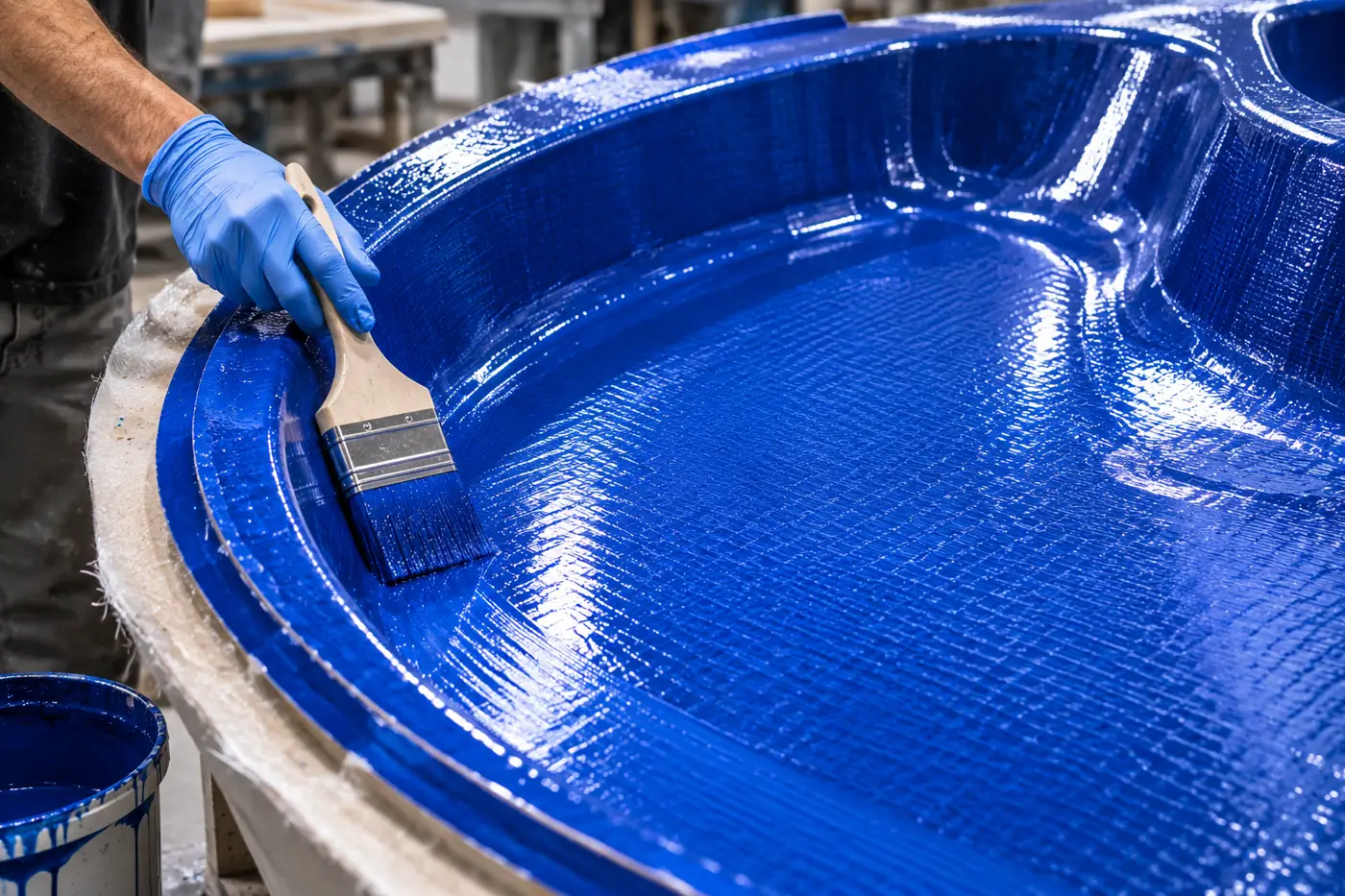
Casting resins, epoxy, polyester and polyurethane, cure slowly in thick sections with exotherm, so pigments must be inert toward the cure system, non-reactive with catalysts or hardeners, and available as fine pastes for streak-free tinting of clear or solid castings. Source From India supplies casting-grade organics and dispersions for art, jewelry, encapsulation and decorative work. Buyers should confirm compatibility with the specific resin chemistry, transparency for tinted-clear castings or opacity for solid color, resistance to yellowing and UV fade in display pieces, and no interference with cure or exotherm. Fine dispersions prevent settling and streaking in deep, slow-curing pours.
At a glance
Casting pigments must not react with epoxy hardeners, polyester catalysts or PU isocyanates, avoiding cure inhibition, shade shift or soft spots.
Deep slow pours show streaks, so fine pigment pastes disperse without settling for even color through thick clear or solid castings.
Transparent grades give tinted-clear castings while stronger opaque grades deliver solid color, chosen to suit the decorative effect wanted.
Display and jewelry castings face light, so UV-stable pigments and awareness of resin yellowing keep pieces true over time.
Recommended pigments
A starting shortlist of export-grade organic pigments relevant to Pigments for Casting Resin. Open any grade for shade, fastness and packing detail, or send your requirement for a matched recommendation.
Carbazole violet for high-strength blue-violet industrial applications.
View export grade Blue PigmentsHigh-strength beta blue for export-grade paints, inks, plastics, and masterbatch.
View export grade Yellow PigmentsArylide yellow grade for decorative coatings and water-based systems.
View export grade Red PigmentsStrong naphthol red for coatings, plastics, and masterbatch.
View export grade Pigment PastesStable epoxy paste for floor coatings and resin systems.
View export gradeExplore more
Answers
Casting resins cure through reactive chemistry, and incompatible pigments can inhibit cure, shift shade or leave soft, tacky spots in thick sections. We supply inert grades and pastes matched to epoxy, polyester and polyurethane systems, so castings cure fully and hold their intended color throughout the piece.
Thick, slow-curing castings reveal any uneven pigment as streaks or settling. We supply fine pigment pastes and dispersions that mix in smoothly and stay suspended, so color stays uniform through deep clear or solid pours without banding, sinking or swirl marks.
The resin itself, especially epoxy, can yellow under UV, separate from pigment fade. For display and jewelry pieces we recommend UV-stable pigments and note the resin's own tendency, so buyers understand that long-term color depends on both pigment and resin choice.
Yes. Tinted-clear castings need transparent pigment dispersions that color without clouding, while solid pieces use stronger opaque grades. We supply both and advise on the effect wanted, so artists and manufacturers achieve either glass-like tints or fully opaque cast colors.
Buyer knowledge base
A quick orientation for buyers new to Indian pigment supply — what to specify, what to expect and how to move fast.
Heat, light, weather, solvent and migration resistance matched to the end use, not over-specified.
Sourced at origin through an in-house export desk — one contact from sample to shipment.
High tinting strength means less pigment per batch and cleaner, more economical shades.
For outdoor use, phthalocyanine and DPP grades keep colour through sun and weather.