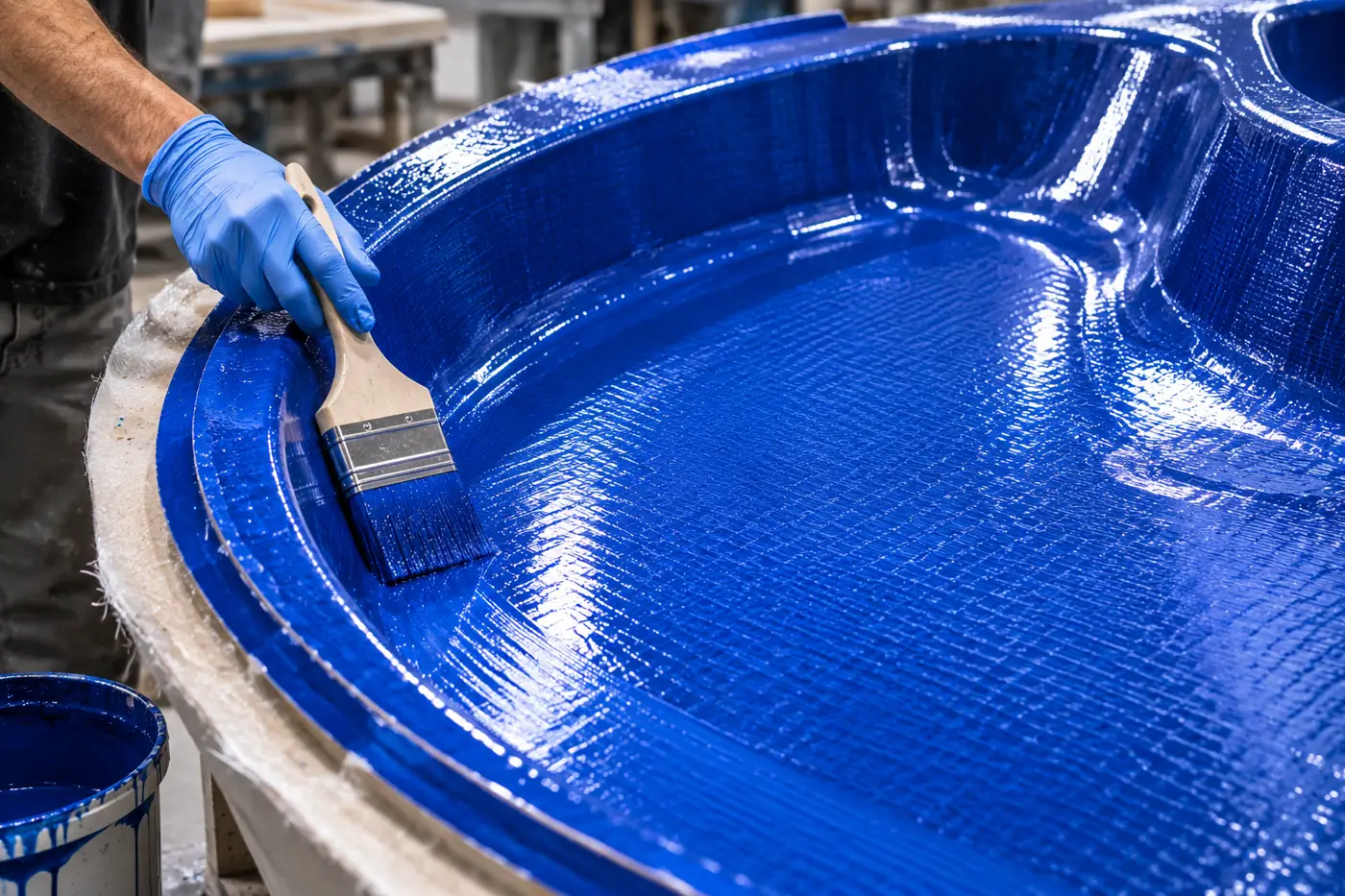
Weather-facing durability
Gel coat is the exposed composite skin, so pigments need top weather, water and UV fastness to resist fade and chalk outdoors.
 Pigments by Source From India
Applications
Pigment recommendations for gel coats with technical checks and export enquiry support.
Gel coats form the exposed, weather-facing surface of fiberglass composites, so pigments must be highly weatherfast, non-reactive with the polyester or vinyl-ester resin and its peroxide cure, and supplied as fine dispersions that tint without disrupting cure or causing surface defects. Source From India supplies gel-coat-grade organics and pastes for marine, sanitary and transport composites. Buyers should confirm exterior weather and water fastness for marine exposure, compatibility with peroxide-catalyzed unsaturated polyester cure, resistance to fade and chalk on the outer surface, and streak-free dispersion. Because the gel coat is the visible durable skin, color longevity and cure-safe pigment behavior are decisive.
At a glance
Gel coat is the exposed composite skin, so pigments need top weather, water and UV fastness to resist fade and chalk outdoors.
Unsaturated polyester cures with peroxide catalyst, so pigments must not inhibit or accelerate cure or cause soft, tacky surface spots.
Sprayed gel coats show streaks, so fine pigment pastes disperse evenly for uniform color across large molded composite surfaces.
Boat hulls sit in water, so pigments must resist leaching and blistering to keep gel-coat color stable under prolonged immersion.
Recommended pigments
A starting shortlist of export-grade organic pigments relevant to Pigments for Gel Coats. Open any grade for shade, fastness and packing detail, or send your requirement for a matched recommendation.
Yellow-shade green for plastics, coatings, PVC, and export applications.
View export grade Red PigmentsCalcium lake red for printing inks, plastics, and packaging coloration.
View export grade Orange PigmentsBright orange pigment for paint, plastic, and coating systems.
View export grade Pigment PastesSolvent-compatible paste for industrial paints and ink systems.
View export grade Yellow PigmentsHigh-tinctorial yellow selected for general industrial demand.
View export gradeExplore more
Answers
The gel coat is the outermost, weather-exposed layer of a composite, taking the full brunt of UV, water and abrasion. Weak pigments fade and chalk quickly, spoiling the visible surface. We recommend high-performance weatherfast grades so marine and outdoor composites keep color and gloss for years.
Yes. Unsaturated polyester gel coats cure with peroxide catalysts and MEKP, and some pigments can inhibit or accelerate that reaction, causing soft spots or shade issues. We supply cure-compatible grades and pastes proven in polyester and vinyl-ester systems so cure and color both stay reliable.
Gel coats are usually tinted with fine pigment pastes for even, streak-free color in the sprayed or brushed surface layer. We supply dispersions matched to the resin so large molded parts like hulls and panels come out uniformly colored without banding or blotches.
For marine use, pigments must resist water leaching and blistering under constant immersion. We select water- and weather-fast grades suited to boat gel coats, so hull colors stay bright and stable rather than dulling, chalking or blistering in prolonged saltwater service.
Buyer knowledge base
A concise sourcing reference — how grade, shade and fastness are matched to your process, and what to send to get a qualified quotation quickly.
REACH and RoHS declarations and correct HS codes prepared for your market's customs.
Approve shade, strength and dispersion on a sample before any production quantity.
25 kg bags, palletised and batch-labelled, cleared under HSN 3204 17 90 for smooth customs.
Guidance on oil absorption and let-down, plus ready-to-use pastes where direct handling helps.