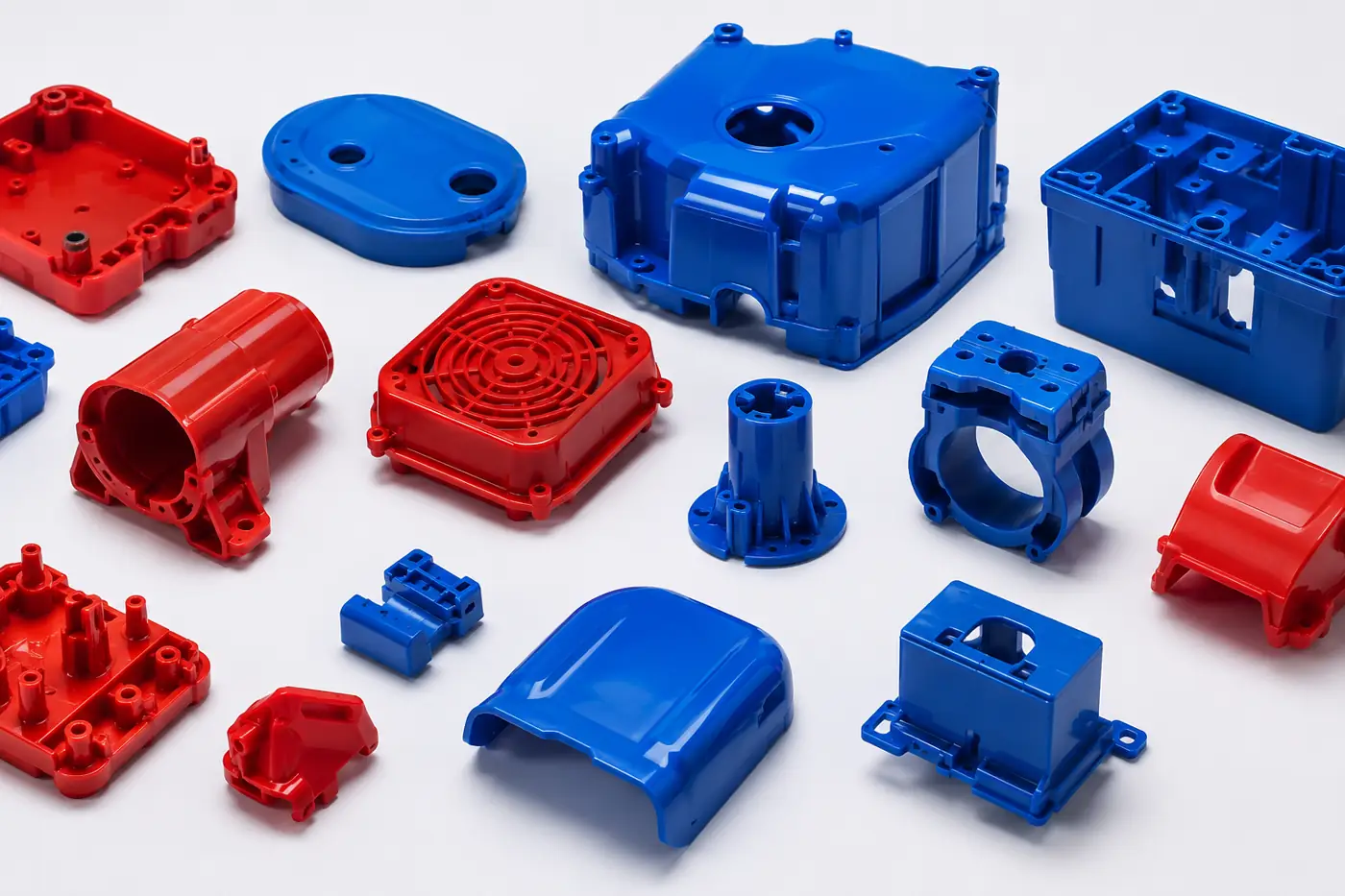
Low-temperature foam process
EPS expands with steam at modest temperatures, so heat stability is undemanding, but even bead coloring becomes the primary challenge.
 Pigments by Source From India
Applications
Pigment recommendations for eps with technical checks and export enquiry support.
Expanded polystyrene is processed at low steam temperatures during bead expansion and molding, so heat demands are modest, but pigments must disperse evenly across foam beads, resist migration into the cellular structure, and, for exterior insulation or packaging, provide the required light fastness. Source From India supplies EPS-grade organics suited to bead coloring and masterbatch routes. Buyers should confirm even distribution across expanded beads without mottling, migration resistance in the foam, light fastness for any exposed use, and compatibility with the expansion process so cell structure and density stay uniform. Consistent grades keep large molded foam blocks and packaging uniform in color.
At a glance
EPS expands with steam at modest temperatures, so heat stability is undemanding, but even bead coloring becomes the primary challenge.
Pigment must spread uniformly across expanded beads to avoid mottling and patchy color in large molded foam blocks and shapes.
Cellular EPS can let mobile pigments migrate, so migration-resistant grades keep color stable in packaging and insulation over time.
Pigments must not disrupt bead expansion, so grades are chosen to preserve uniform cell structure, density and mechanical foam properties.
Recommended pigments
A starting shortlist of export-grade organic pigments relevant to Pigments for EPS. Open any grade for shade, fastness and packing detail, or send your requirement for a matched recommendation.
Bright orange pigment for paint, plastic, and coating systems.
View export grade Pigment PastesSolvent-compatible paste for industrial paints and ink systems.
View export grade Yellow PigmentsHigh-tinctorial yellow selected for general industrial demand.
View export grade Red PigmentsNaphthol red with balanced brightness and industrial usability.
View export grade Pigment PastesDispersion paste designed for polyester resin coloration.
View export gradeExplore more
Answers
EPS expands and molds with low-temperature steam, so heat stability is far less demanding than in melt-processed plastics. The main challenge is achieving even color across expanded beads and resisting migration in the foam, so we focus on grades that distribute uniformly rather than on extreme heat resistance.
Color can be introduced at the bead stage or via masterbatch, and even distribution is critical to avoid mottling across large foam parts. We supply EPS-suited grades and advise on the route so molded blocks, packaging and insulation come out uniformly colored without patchiness.
Poorly chosen additives can disturb bead expansion, altering cell structure and density. We recommend grades compatible with the expansion process so foam properties stay consistent, keeping the mechanical strength and insulation performance EPS is used for while delivering the target color.
For exposed uses like exterior insulation trim or outdoor packaging, light fastness matters to prevent fading. For protected or short-life packaging it is less critical. We advise grades matched to the exposure the finished foam part will actually face in service.
Buyer knowledge base
Buying organic pigments from India, simplified: the checks that matter, the documents to expect and the quickest route from enquiry to shipment.
Heat, light, weather, solvent and migration resistance matched to the end use, not over-specified.
Sourced at origin through an in-house export desk — one contact from sample to shipment.
High tinting strength means less pigment per batch and cleaner, more economical shades.
For outdoor use, phthalocyanine and DPP grades keep colour through sun and weather.