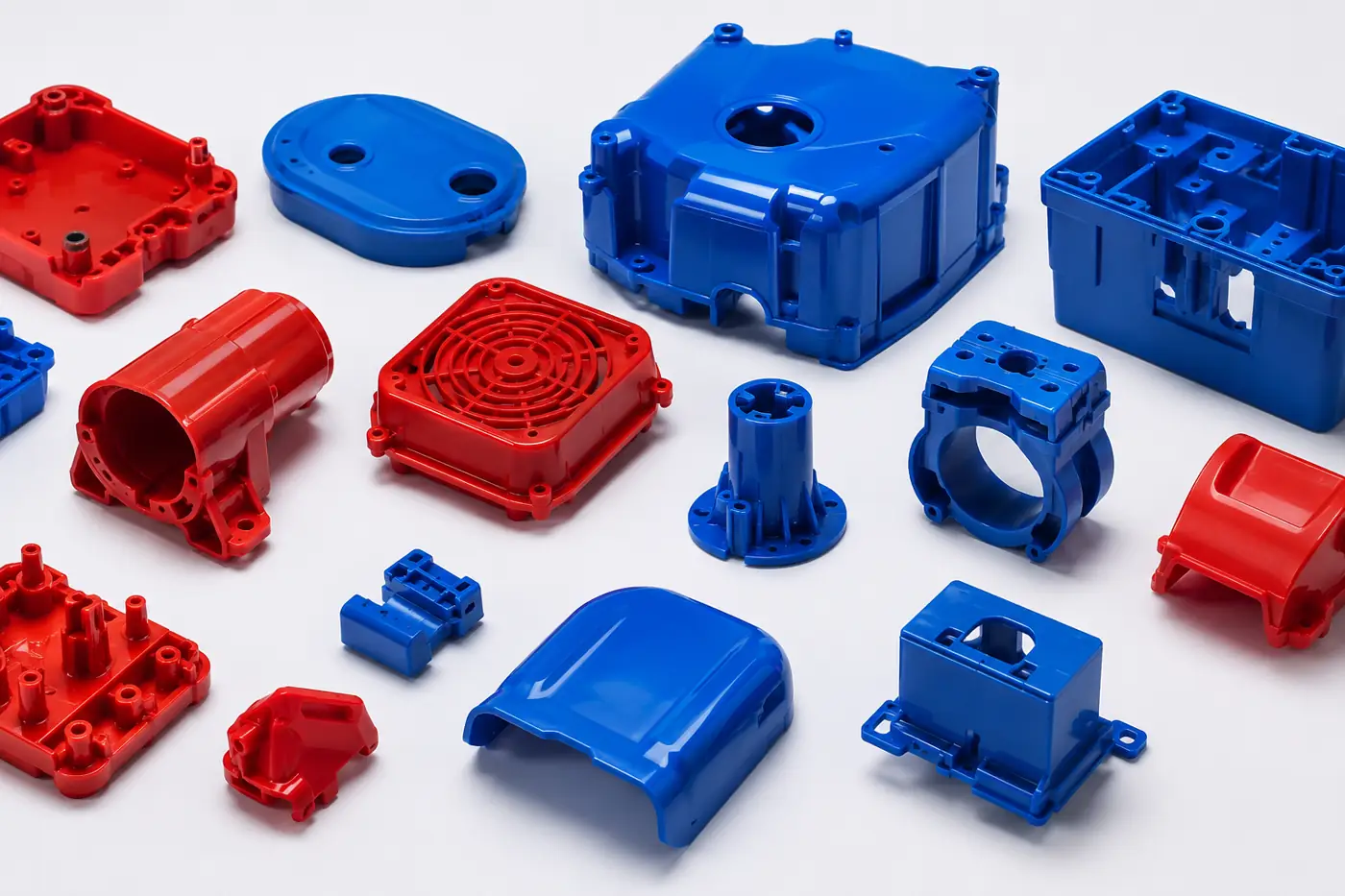
Migration and bloom control
The styrenic matrix promotes pigment migration, so specify non-blooming grades to keep PS surfaces clean and prevent set-off in packaging.
 Pigments by Source From India
Applications
Pigment recommendations for polystyrene with technical checks and export enquiry support.
Polystyrene comes in crystal (clear) and high-impact grades for packaging, disposables and housings, processed at moderate temperatures with the styrenic matrix's characteristic migration tendency. Organic pigments must resist migration and blooming, be heat stable for the process, and, in crystal PS, tint without destroying the transparency that is the grade's selling point. Buyers should confirm migration resistance to prevent bloom and set-off, transparency for clear tinted PS, heat stability matched to the process, and clean bright shades with good dispersion for the smooth, glossy surfaces typical of styrenic products.
At a glance
The styrenic matrix promotes pigment migration, so specify non-blooming grades to keep PS surfaces clean and prevent set-off in packaging.
Clear crystal polystyrene needs transparent pigments that tint without hazing, preserving the glass-like transparency the grade is chosen for.
PS processes at moderate temperatures, so pigments must hold shade through the melt without darkening or losing strength.
Styrenic surfaces are smooth and glossy, so well-dispersed, clean pigments give the bright, defect-free colour PS products expect.
Recommended pigments
A starting shortlist of export-grade organic pigments relevant to Pigments for Polystyrene. Open any grade for shade, fastness and packing detail, or send your requirement for a matched recommendation.
Diarylide yellow orange shade for plastics and heat-sensitive systems.
View export grade Red PigmentsDPP red for premium weather-resistant coatings and plastics.
View export grade Pigment PastesPU-compatible pigment paste for industrial coatings and elastomers.
View export grade Yellow PigmentsEconomical diarylide yellow used in inks and industrial color systems.
View export grade Red PigmentsBarium lake red widely used in ink and coating formulations.
View export gradeExplore more
Answers
The styrenic matrix lets mobile pigments migrate to the surface and bloom, or transfer to contacting materials as set-off. In packaging and disposables this causes staining and appearance defects. Non-migrating grades keep colour in the polymer, which is essential for clean, stable colour on styrenic products throughout their life.
Yes, using transparent pigments that colour the resin without clouding it, preserving the glass-clear look of crystal PS. This suits tinted cups, boxes and display items. The pigment must be both migration resistant and transparent, so grades are chosen specifically to tint while maintaining clarity in crystal-grade polystyrene.
Polystyrene processes at moderate temperatures, lower than engineering polymers like PET or polycarbonate, so heat stability demands are relatively modest. The dominant concern is migration rather than extreme heat. Still, confirm the pigment holds shade through the actual process, especially in longer-residence or higher-shear operations.
Yes. High-impact polystyrene contains rubber and is opaque, so transparency is irrelevant but migration and clean colour still matter. Crystal PS is clear and needs transparent tints. Both share styrenic migration concerns, but the clarity requirement and the presence of rubber shift the emphasis between the two grades.
Buyer knowledge base
Buying organic pigments from India, simplified: the checks that matter, the documents to expect and the quickest route from enquiry to shipment.
Bags, cartons, pallets and labels planned for clean warehouse handling and clearance.
TDS, SDS/MSDS and batch COA, plus REACH and RoHS declarations issued on request.
Heat, light, weather, solvent and migration resistance matched to the end use, not over-specified.
Sourced at origin through an in-house export desk — one contact from sample to shipment.